03 / reading document
Article noteAI Gets Smarter Every Day. Are We Getting Smarter Too? Lessons from AI NEXT by BIZCORE
A personal account of AI NEXT BOOTCAMP by BIZCORE on 25 July 2026—and the question of whether our context, judgment, and practice are improving with AI.
question → test → write it down
Start here
Key ideas
- เก็บ Context ของตัวเองให้ดีขึ้น
- เปลี่ยน Idea ให้เป็น Working Brief ก่อนทำ
- ใช้ AI แก้คอขวด ไม่ใช่ใช้เพราะกำลังเป็นกระแส
- แยก Planning ออกจาก Execution
- รักษา Human Judgment ไว้ตรงที่ความผิดพลาดมีผลกระทบสูง
- อย่าให้ AI ฝึกทุกวันอยู่ฝ่ายเดียว
On this page
- The question I brought home
- Morning with Mew from Mew Social: start from pain and context
- Build workflows around people, not around tools
- Working Brief: give an idea a path forward
- Model Routing: match the model to the work
- A post ends; reader feedback helps us improve the work
- Afternoon with Toy from DataRockie: data makes thinking inspectable
- The workshop room made the workflow visible
- AI can do the work, but it cannot practice the skill for us
- Data Quality: check the data before the analysis
- When a result is wrong, we need to trace where it started
- What I will try after this event
- AI is a powerful amplifier of what we put into it
- Glossary for this article
- Sources and note
The question I brought home
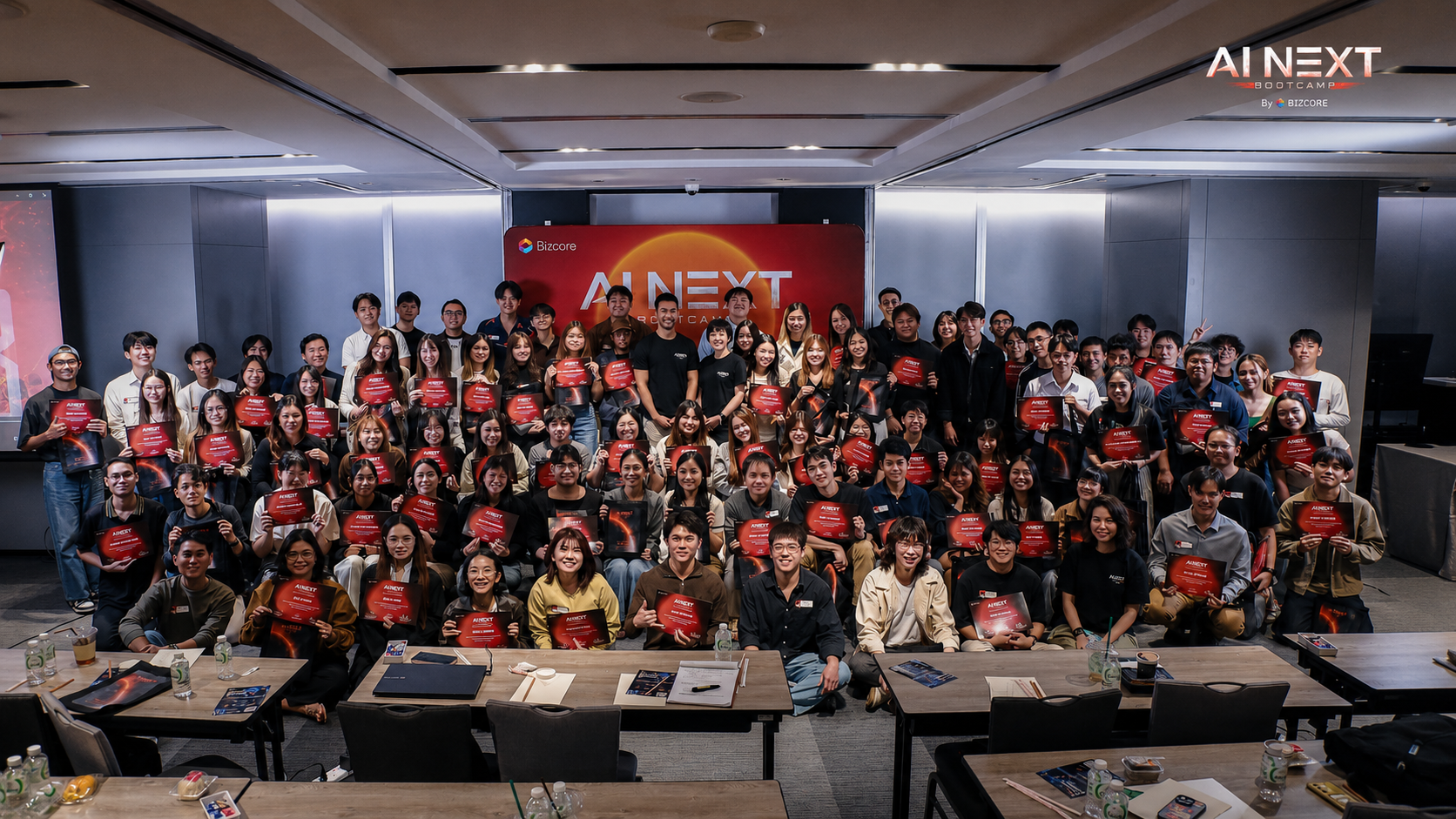
On 25 July 2026, I attended AI NEXT BOOTCAMP by BIZCORE. The day had two sessions that approached AI from different sides: Mew from Mew Social in the morning, and Toy from DataRockie in the afternoon.
AI tools and models are changing quickly. Sometimes they change fast enough to make us feel that we should keep chasing the next release. What stayed with me was not a model name or a new tool. It was a question: if AI gets smarter every day, are we getting smarter too?
The two sessions did not give one identical answer. Together, they made one idea clearer: AI can extend our speed, while people still need to build context, practice thinking, and decide what should happen next.
Morning with Mew from Mew Social: start from pain and context
AI may have broad knowledge and fast answers, but its output changes when we give it real information about the work. In the Mew Social session, the point that stayed with me was simple: do not begin with “Which AI tool is trending?” Begin with where the work is stuck and what the system needs to know before it can help. This information around the problem is what I mean by context.
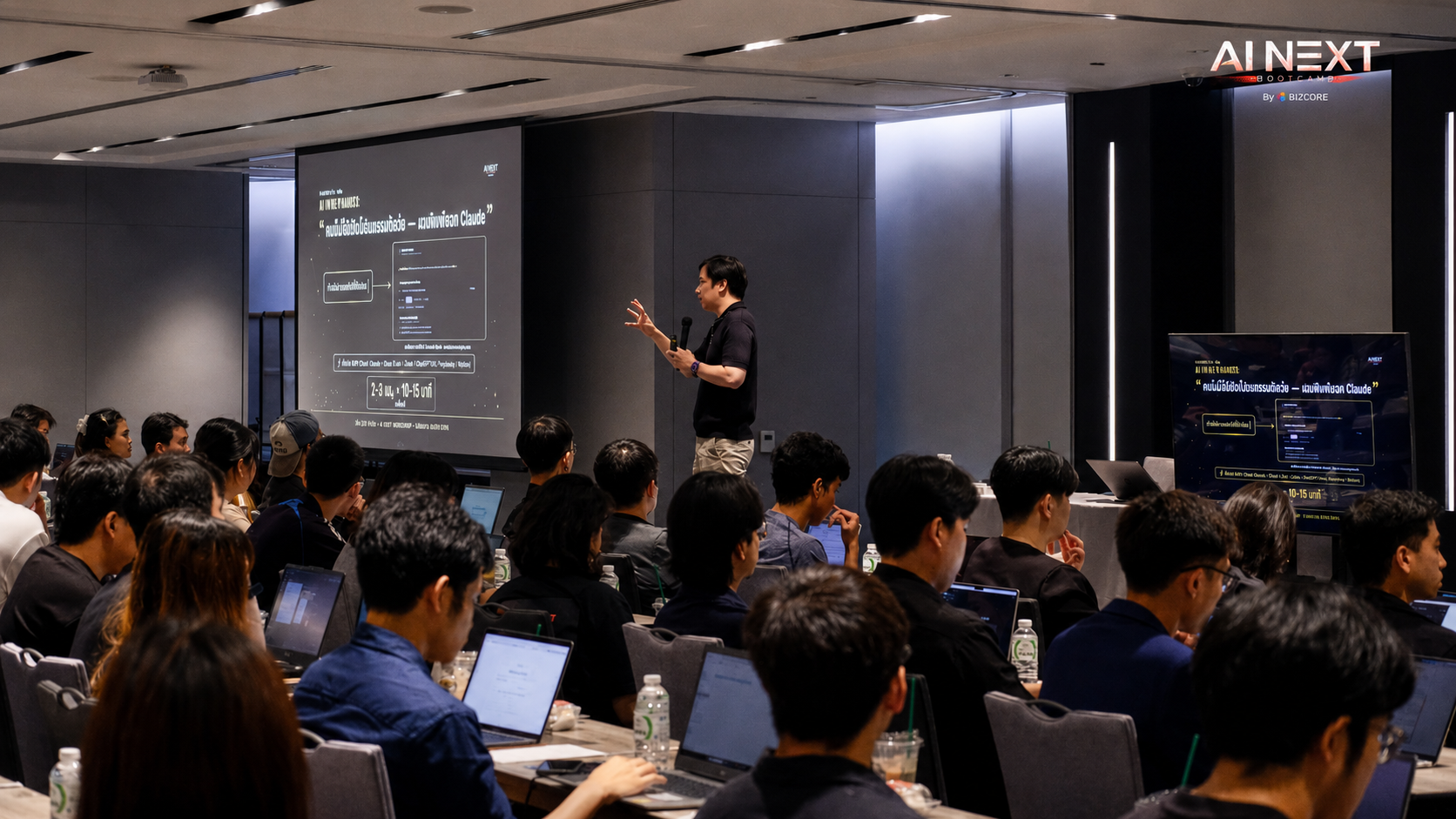
I took two large context blocks from the session: information from the outside world, and information that belongs to us.
- Global Context — outside information such as research, documentation, current best practices, market information, and relevant domain knowledge
- Our / Business / Personal Context — information from our own work, such as previous results, customers, constraints, feedback, and the knowledge or style we have built over time
When I bring that idea back to my own workflow, I add the goal and boundaries (Goal & Constraints) as another layer so AI knows where we are trying to go, what limits matter, and what it must not cross.
This arrangement is my way of organizing the idea, not a claim that the speaker presented a formal three-layer framework. It helps me distinguish general knowledge from our own context, then make the intended destination and boundaries explicit.
Build workflows around people, not around tools
Once we start from the problem, a workflow does not need to look like someone else’s. One person may be stuck in research; another in topic generation, drafting, a content calendar, video steps, an AI avatar, comment handling, or lead escalation.
An AI or avatar can help deliver a message, but perspective, knowledge, experience, and judgment should still come from the creator. I want AI to help communicate what we think, not gradually replace the point of view that makes the work ours.
One example I remember from the day involved a dense source document or whitepaper—an in-depth document about a particular subject. AI helped break the material into several possible content angles. The lesson was not that one document always becomes a fixed number of posts. It was a sequence:
Source material → understand and research → let AI assist decomposition → choose the useful angle as a human → rewrite it in the creator’s own voice
Working Brief: give an idea a path forward
When an idea is still only in our head, it is easy to assume everyone else understands it the same way. A short working map for the idea or problem is called a Working Brief. AI can ask us about the missing information, and the answers give another person or system a clearer path to continue the work.
If I organize the idea for my own work, I want a brief to answer at least:
- What result do we want? (Outcome)
- What problem are we solving? (Problem)
- What needs to be delivered? (Deliverables)
- Where is the boundary of the work? (Scope)
- What limits matter? (Constraints)
- How will we know it is successful? (Success Criteria)
- What is the next step? (Next Step)
This is my way of turning the idea into a working brief, not an official universal field list from the speaker. The important behavior matters more than the labels: if the context is incomplete, ask before generating an answer that only looks complete.

Model Routing: match the model to the work
Different tasks do not need the same AI model. Work that needs structural thinking or planning may benefit from a stronger model, like an architect. Work with clear steps may use a smaller model, like a builder following a clear plan. This practical idea is called Model Routing.
For example, classifying, extracting fields, or reformatting may be better served by a faster and less expensive option. Planning across several constraints may need something else. The useful measure is behavior on the real task: completeness, time, quality, and stability—not a model name or one benchmark.
A post ends; reader feedback helps us improve the work
In content work, comments are evidence from readers. They can contain positive, negative, or neutral signals. We can collect them to see what readers question, what they agree with, and which parts an article did not explain well enough. This is sometimes called Voice of Customer.
Routine replies with low risk may be drafted or grouped with AI. Higher-intent, sensitive, or potentially misleading cases should surface to a human. This pattern is often called Human-in-the-loop: AI continues low-risk steps, while a person reviews or approves sensitive or high-impact steps. I do not see this as a formula that guarantees reach or engagement. It is a way to keep useful feedback from disappearing.
For Dream Logs Data, the process I want to try is:
We publish an article, people ask questions or comment, and those responses show us what is unclear and what readers want to explore next. Viewed as a system, this is one kind of Feedback Loop:
Long-form article on dreamlogsdata.com → short social post → questions, comments, and reactions → collect useful feedback as context → improve future articles, explanations, and topic choices
That is my application for Dream Logs Data, not a workshop framework I should attribute directly to either speaker.
Afternoon with Toy from DataRockie: data makes thinking inspectable
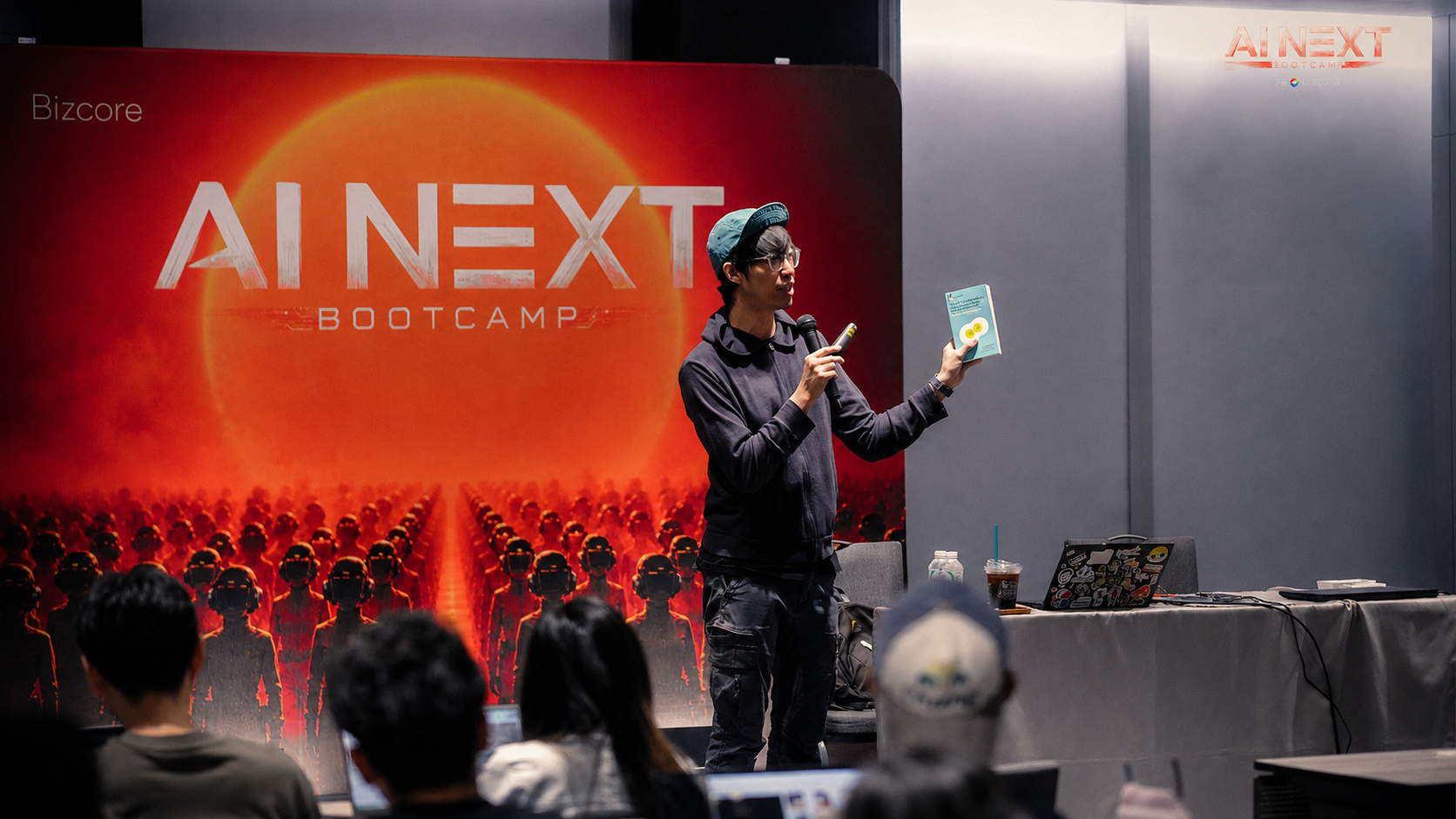
In the afternoon, Toy from DataRockie brought the conversation back to the foundations of thinking and working with data. Data is not only a final step after AI. It shapes the question from the beginning.
The workshop room made the workflow visible
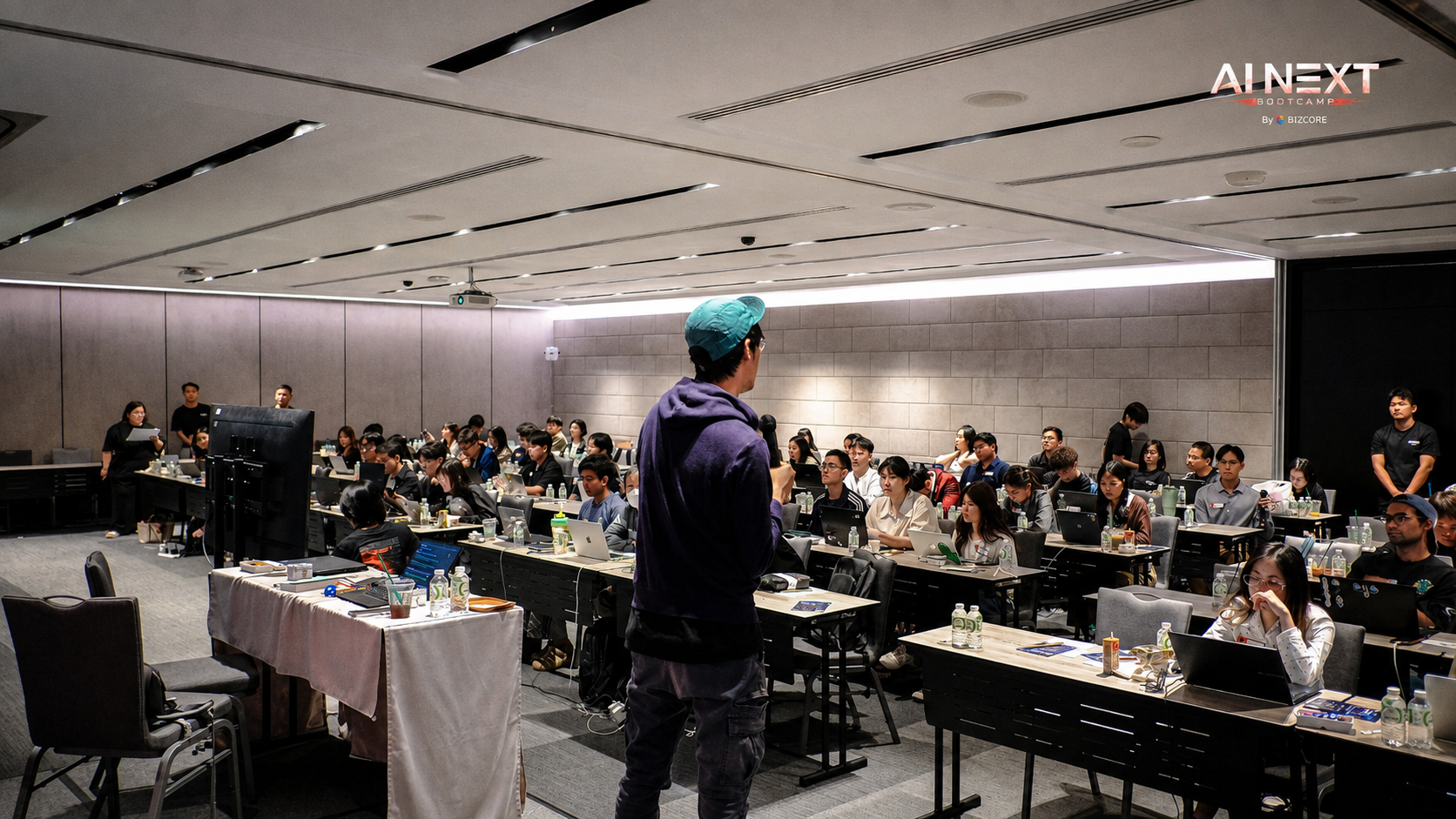
The room full of participants and laptops made me think about workflow more than tools. People may use similar tools, but their goals, context, checks, and approval points can still be different.
AI can do the work, but it cannot practice the skill for us
I first thought about AI through the calculator analogy. A calculator makes arithmetic faster after we understand what arithmetic means. It does not tell us what the problem is, whether the inputs are correct, or how the answer should change a decision.
AI can read and write for us, but that does not automatically give a human the learning experience of reading and writing. If AI always reads and writes instead of us, we may get faster output while our own capability stays still.
The dangerous pattern is using AI to do something we do not understand—only faster. That does not make AI bad. Using AI for leverage can be extremely useful. The question is whether the tool is extending a skill we want to own, or whether we are handing away every difficult step and leaving ourselves no room to practice.
AI can help me work faster, but if every difficult step goes to AI, I also have to ask: which part of this work is still teaching me?
Good output is not the same thing as human capability. I want to ask whether thinking, judgment, and the ability to frame a problem are improving alongside the tools.
Data Quality: check the data before the analysis
Data that is not ready can send even careful analysis in the wrong direction. Before analyzing, check for duplicate records, missing information, incorrect formats, and whether the data covers the question or only part of it. These checks are part of Data Quality. The data does not need to be perfect, but we need to understand its limits and how they affect decisions.
A message that looks short to us may not be short for AI. Models process text as smaller units called Tokens; one Token is not always one word. The process of splitting text into those units is called Tokenization.
Token counts depend on the tokenizer and model, and different languages may produce different counts. Character or word count alone is therefore not enough. Measure with the model being used, along with context length, latency, and what happens when the context exceeds its budget.
When a result is wrong, we need to trace where it started
When an AI result is wrong, we need to know whether the problem entered through the source information, the prompt, a tool, a transformation, or the review step. I therefore want to keep a record that lets me look back through the workflow.
For an AI and data workflow, I want to record:
- which source produced the context
- which Brief or Prompt version was used
- which Model and Tool ran
- how the information changed along the way
- which review happened and who approved the result when the risk warranted it
Keeping a record of what happened at each step is Traceability. Data Lineage focuses on the path data takes from one source or step to another. Both make failures easier to locate and help separate a problem in the data, retrieval, model, or execution step.

What I will try after this event
- Improve the information I keep about my own work, separating outside knowledge from lived experience.
- Turn an idea into a Working Brief and name the Next Step before starting.
- Use AI to remove bottlenecks or explore angles while a human chooses the useful point of view.
- Separate Planning from Execution and match the model to the work.
- Bring useful feedback from articles and social posts back into the information I keep.
- Keep practicing the skills I want to own instead of handing every difficult step to AI.
AI is a powerful amplifier of what we put into it
Models will improve, tools will become easier, and systems that work through steps for us (Agents) will become more capable. Platforms still cannot automatically give us accumulated context, lived experience, lessons from failed experiments, problem understanding, standards, judgment, or principles.
AI is a powerful amplifier. If what we put into it is high-quality information, experience, and thinking, it can expand those things much faster.
So the question I brought home from AI NEXT is not “Which AI tool should I use this year?” It is the same question, now sharper: if AI gets smarter every day, are we building our own information, thinking, and workflow to get smarter with it?
Glossary for this article
- Context — information around a problem that helps AI understand what we are doing, for whom, and under which conditions.
- Working Brief — a short map of an idea or problem that helps another person or system continue the work.
- Model Routing — choosing a model that fits the task; harder planning may need a stronger model, while clear steps may use a smaller one.
- Human-in-the-loop — letting AI continue low-risk steps while a person reviews or approves sensitive or high-impact steps.
- Data Quality — the readiness and limits of data, including duplicates, missing information, incorrect formats, and incomplete coverage.
- Token — a small unit of text processed by an AI model; one Token is not always one word.
- Tokenization — splitting text into Tokens before a model processes it.
- Traceability — keeping a record of what happened at each step and which information or tools were used.
- Data Lineage — the path data takes from one source or step to another in a workflow.
Sources and note
This article is a personal synthesis of the author’s experience attending the event and notes / transcript material from the event. It is not a word-for-word transcript of either speaker.